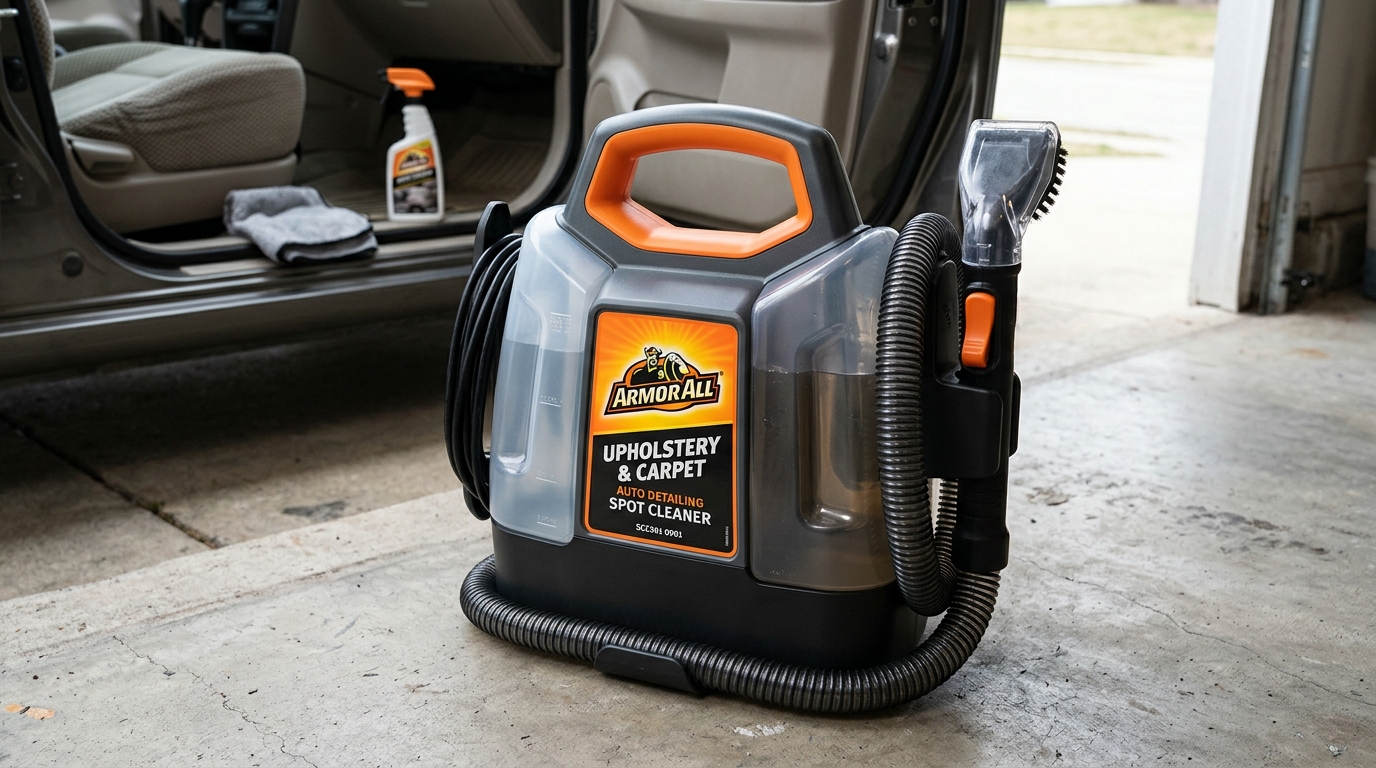
Keeping a Car Interior Fresh: What to Know About the Armor All Upholstery & Carpet Auto Detailing Spot Cleaner
A car interior lives a harder life than most rooms in a house. It heats up in summer, cools down in winter, collects crumbs from quick meals, absorbs spills from travel mugs, and takes a steady stream of shoes, bags, and groceries. Even careful drivers end up with a smudge on a seat, a mark on the floor mat, or a stain whose origin nobody can quite remember.
For many people, the first line of defense is a spray-on spot cleaner designed for automotive upholstery and carpet. The Armor All Upholstery & Carpet Auto Detailing Spot Cleaner, listed with the identifiers SCC301 0901, belongs to that group. Unlike the portable extraction machines that appear in many cleaning guides, this is a ready-to-use cleaning product intended for spot treatment inside a vehicle.
This article offers a general, educational overview. It explains what a product of this kind is typically designed to do, where it may be useful, how to approach car interior cleaning carefully, and what to confirm before ordering. It is not a verdict on the product, and it does not replace the label, the manufacturer’s instructions, or your vehicle owner’s manual, which are the most reliable sources for directions and safety information.
What the Listing Tells You
The Brand
Armor All is a widely recognized name in automotive care products, and it is generally associated with items for cleaning and protecting car interiors and exteriors. A familiar brand can make it easier to find usage instructions and product information, though it does not change the need to read the label for the specific item.
“Upholstery & Carpet”
This tells you the cleaner is intended for fabric seats and carpeted surfaces such as floor liners and mats. It is not necessarily meant for leather, vinyl, or hard plastics, which usually have their own dedicated products. The label will state which surfaces the manufacturer recommends and which it does not.
“Auto Detailing Spot Cleaner”
The phrase points to a product used for targeted cleaning rather than a full-interior deep clean. Spot cleaners are typically applied to a specific mark, worked in gently, and then wiped or blotted away according to the instructions.
“SCC301 0901”
These characters look like a product or model reference rather than a description. Listings sometimes include such codes for inventory or identification. Because they do not explain how the product works, the most useful thing to do is to confirm that the listing’s images, size, and description match what you intend to buy.
How Spot Cleaners for Car Interiors Generally Work
Most spray-on upholstery cleaners follow a similar pattern. You shake or prepare the product as directed, apply it to the soiled area, allow it a short time to work, and then agitate gently with a soft brush or cloth. After that, you blot or wipe away the loosened material and let the area dry. Some products are designed to be used with a damp cloth, others with a dry microfiber towel, and some suggest a follow-up step.
The idea is to loosen dirt, oils, or residue from the surface of the fibers so they can be lifted away. The precise formulation, working time, and technique differ from product to product, so the label is the guide. It is also worth remembering that results depend on the stain, the fabric, and how long the mark has been there.
Key Features Worth Understanding
Purpose-Built for Automotive Interiors
Car upholstery and carpet are made from materials chosen to handle wear, sunlight, and temperature swings. A cleaner intended for automotive use takes that environment into account. Whether any particular product is suitable for your vehicle depends on the materials inside it, which the owner’s manual may describe.
Spot-Treatment Format
A targeted spray allows you to deal with a small area without cleaning the whole interior. It can be convenient for quick fixes, such as a coffee drip on a seat edge or a muddy mark on a floor mat.
Ready-to-Use Convenience
Many spot cleaners need no mixing or special equipment. That is part of their appeal: you can keep one in the garage or trunk and use it when needed. The label will state whether any dilution or preparation is required.
Compatibility With Everyday Tools
These products are generally used with items most households already own, such as a soft brush, a microfiber cloth, or a sponge. Choosing gentle tools helps protect the fabric.
A Familiar, Accessible Product Type
Aerosol and trigger-spray cleaners are widely used, which means plenty of general guidance exists on how to apply them safely. Still, the instructions for the product in your hand take priority.
How People Commonly Use an Auto Upholstery Spot Cleaner
Everyday Seat Marks
Fabric seats can show marks from food, drinks, and contact with clothing. A spot cleaner can be used on small areas when applied according to directions.
Floor Mats and Carpeting
Mats and carpeted floor areas collect mud, salt, and spills. Removing loose debris with a vacuum first usually makes spot cleaning more effective.
Child Seat Zones
Parents and caregivers often face spills and crumbs around car seats. If you need to clean fabric near a child seat, check the seat manufacturer’s instructions first, and do not use products on child restraint harnesses or straps unless the manufacturer says it is acceptable.
Pet Travel Messes
Pet hair, muddy paws, and the occasional accident can leave marks on seats and carpets. Remove loose hair first, treat the area as directed, and make sure the surface dries well afterward. Keep pets out of the vehicle while cleaning and until the area has aired out.
Pre-Sale or Trade-In Touch-Ups
Before selling or trading in a vehicle, people often tidy up visible marks. A spot cleaner can help freshen specific areas, though results depend on the material and the age of the stain.
Seasonal Cleanups
After winter road salt or a muddy season, many drivers give floor areas extra attention. Spot cleaners can be one tool in a broader cleaning routine.
Who May Find This Kind of Cleaner Suitable
Drivers who want a quick fix for small marks. If your interior mostly needs occasional spot attention, a targeted product may match your needs.
Families with kids. Crumbs, spills, and sticky fingers are common in family vehicles.
Pet owners who travel with animals. Muddy paws and shedding add to the cleaning load.
People who prefer simple tools. A spray, a soft brush, and a cloth are easy to store and use.
Anyone maintaining a vehicle for resale. Spot cleaning can help tidy visible areas.
Those who do not own a carpet-cleaning machine. A spray cleaner is a lower-commitment option than buying an extraction machine.
On the other hand, spray spot cleaners may be less suitable for people who need to deep-clean heavily soiled upholstery across a whole interior, for those with leather or specialty materials that require different products, or for anyone who prefers to hire a professional detailer for delicate or valuable vehicles.
Important Things to Consider Before Ordering and Using
Read the Full Label and the Listing
Check which surfaces the manufacturer says the product is for, what warnings it lists, and how it should be applied. If the listing and the label differ in any way, the label on the product is the authority.
Confirm Your Vehicle’s Materials
Seats and carpets can be made from many materials, and some interiors combine several. Your owner’s manual often describes what the upholstery is made of and may include cleaning recommendations. If you are not sure, a hidden test patch can help.
Test in an Inconspicuous Spot
Before treating a visible area, try the product on a hidden section, such as under a seat or on the back of a mat. Let it dry and look for color change, staining, or changes in texture.
Avoid Sensitive Components
Do not spray cleaner near airbags, seat sensors, electronics, or wiring unless the product label and the owner’s manual say it is safe. Many modern seats contain components that should stay dry. When in doubt, apply the product to a cloth first instead of spraying directly on the seat, if the label allows.
Ventilate the Vehicle
Cleaning products can have noticeable odors or vapors. Work with the doors open, ideally outdoors or in a well-ventilated space, and follow label warnings about breathing vapors and contact with skin and eyes.
Keep Products Away From Children and Pets
Store cleaners in their original containers, out of reach of children and animals. If a product is swallowed or gets into eyes, follow the first-aid directions on the label and contact poison control or a medical professional as needed.
Do Not Mix Cleaning Products
Combining different chemicals can create hazards. Use the product on its own, as directed, and rinse or wipe surfaces before using anything else.
Use Gentle Tools
A soft-bristled brush or a microfiber cloth is generally gentler than a stiff brush. Scrubbing hard can fray fibers or spread the mark.
Avoid Over-Wetting
Soaking fabric can lead to slow drying and musty smells, and moisture can seep into padding. Light applications and gradual blotting usually work better than heavy saturation.
Allow Plenty of Drying Time
Leave windows or doors open, run a fan, or park in a warm, dry place so the area dries completely. Keep people and pets off damp upholstery.
Keep Expectations Realistic
No spot cleaner can promise to remove every stain. Dried-in marks, dye-based stains, and old spills may need repeat treatments or may not fully come out. Persistent problems may call for professional help.
Check Disposal Guidance
Follow the label’s instructions for storing and disposing of the container, especially if it is an aerosol. Local rules can differ.
How This Product Type Compares With Other Options
Each option below has its own strengths, and the right one depends on the size of the job and the type of interior.
Spray-On Spot Cleaners
These are convenient, inexpensive in terms of equipment, and well suited to small marks. They rely on manual effort and technique, and they do not extract liquid the way a machine does.
Foam Cleaners
Foam formulas are designed to sit on the surface and lift soil with less liquid. They can be a good fit for fabrics that should not get too wet, though directions vary by product.
Portable Extraction Machines
Small machines spray cleaning solution and pull it back out with suction. They can handle bigger or deeper marks and are useful for stairs and furniture as well as cars. They cost more, need storage, and require upkeep such as rinsing tanks.
Handheld Cordless Cleaners
Battery-powered devices offer convenience for quick pickups, with performance that differs between products.
Steam Cleaners
Steam devices use heat for cleaning various surfaces. They are not appropriate for every material, and some vehicle interiors may not tolerate heat or moisture well, so check the owner’s manual before using one.
All-Purpose Household Cleaners
Some people reach for general cleaners already at home. These are not always designed for automotive fabrics and can affect color or texture, so it is wise to follow the vehicle manufacturer’s guidance and test carefully.
Professional Detailing Services
For heavily soiled interiors, specialty materials, or preparing a vehicle for sale, a professional detailer can offer equipment and experience. It costs more per visit and requires scheduling, but it can save time and effort.
Small Habits That Keep Interiors Cleaner
Vacuum first. Removing loose crumbs, sand, and hair before using any liquid cleaner prevents turning debris into mud.
Act early on spills. Blotting fresh spills with a clean cloth usually makes later cleaning easier.
Blot, do not rub. Gentle pressure lifts liquid without driving it deeper or damaging fibers.
Use a light touch with cleaner. Start with a small amount and add more only if needed.
Work from the outside of a mark inward. This helps prevent spreading the stain.
Keep supplies together. A small kit with a soft brush, microfiber cloths, and a vacuum attachment makes quick cleanups easier.
Protect with mats. Using floor mats and seat covers where appropriate reduces how often deeper cleaning is needed.
Air out the car. Opening doors after cleaning helps dissipate odors and speeds drying.
Frequently Asked Questions
What is this product used for?
It is a spot cleaner intended for upholstery and carpet inside vehicles. Check the label for the exact surfaces and uses the manufacturer recommends.
Can I use it on leather seats?
Spot cleaners for upholstery and carpet are not necessarily meant for leather. Check the label and your vehicle’s manual, and use products designed for leather on leather surfaces.
Does it work on old, dried stains?
Results vary. Older stains can be harder to treat, and some may need repeated attention or may not come out completely.
Do I need to rinse it off?
Directions differ by product. Follow the label, which may call for blotting, wiping with a damp cloth, or allowing the area to dry.
Is it safe to use around children and pets?
Keep children and pets away during cleaning and until the area is dry and aired out. Store the product safely and follow the label’s safety directions.
Can I spray it directly on car seats?
Some labels allow direct application, while others recommend applying to a cloth first. Avoid spraying near airbags, sensors, and electronics, and follow the label and your owner’s manual.
Will it remove odors?
Spot cleaners may help with surface-level marks, but lingering odors can have other causes and may need additional steps, such as thorough drying and ventilation. Results vary.
How long does the area take to dry?
It depends on how much product and moisture you used, the material, temperature, and airflow. Allow plenty of time and keep the vehicle ventilated.
Can I use it on child car seat fabric?
Follow the child seat manufacturer’s cleaning instructions first. Do not use cleaners on harnesses or straps unless the manufacturer says it is acceptable.
Should I test it first?
Yes. Try the product on a hidden area before treating a visible one, and check for color change or damage once it dries.
What if the stain does not come out?
Some stains need repeat treatment, and some may be permanent. For persistent problems, a professional detailer may be able to help.
How should I store and dispose of the container?
Store it as the label directs, away from heat and out of reach of children and pets. Follow the label and local rules for disposal.
Where can I find reliable information about the product?
The label, the manufacturer’s website, and the listing page are the best sources. They describe the intended uses, directions, and safety information in the producer’s own words.
Final Thoughts
A well-chosen spot cleaner can take some of the stress out of maintaining a car interior. For small marks, quick accidents, and the general wear that comes with daily driving, a ready-to-use product is easy to keep on hand and easy to use. The Armor All Upholstery & Carpet Auto Detailing Spot Cleaner fits that category, and it may appeal to drivers who want a simple, targeted option rather than a machine or a professional service.
As with any cleaning product, the care you take matters as much as the product itself. Read the label, test in a hidden spot, protect sensitive components, ventilate the space, and give the interior time to dry. Keeping expectations realistic is part of the process, since not every stain can be removed, and some situations call for a different approach.